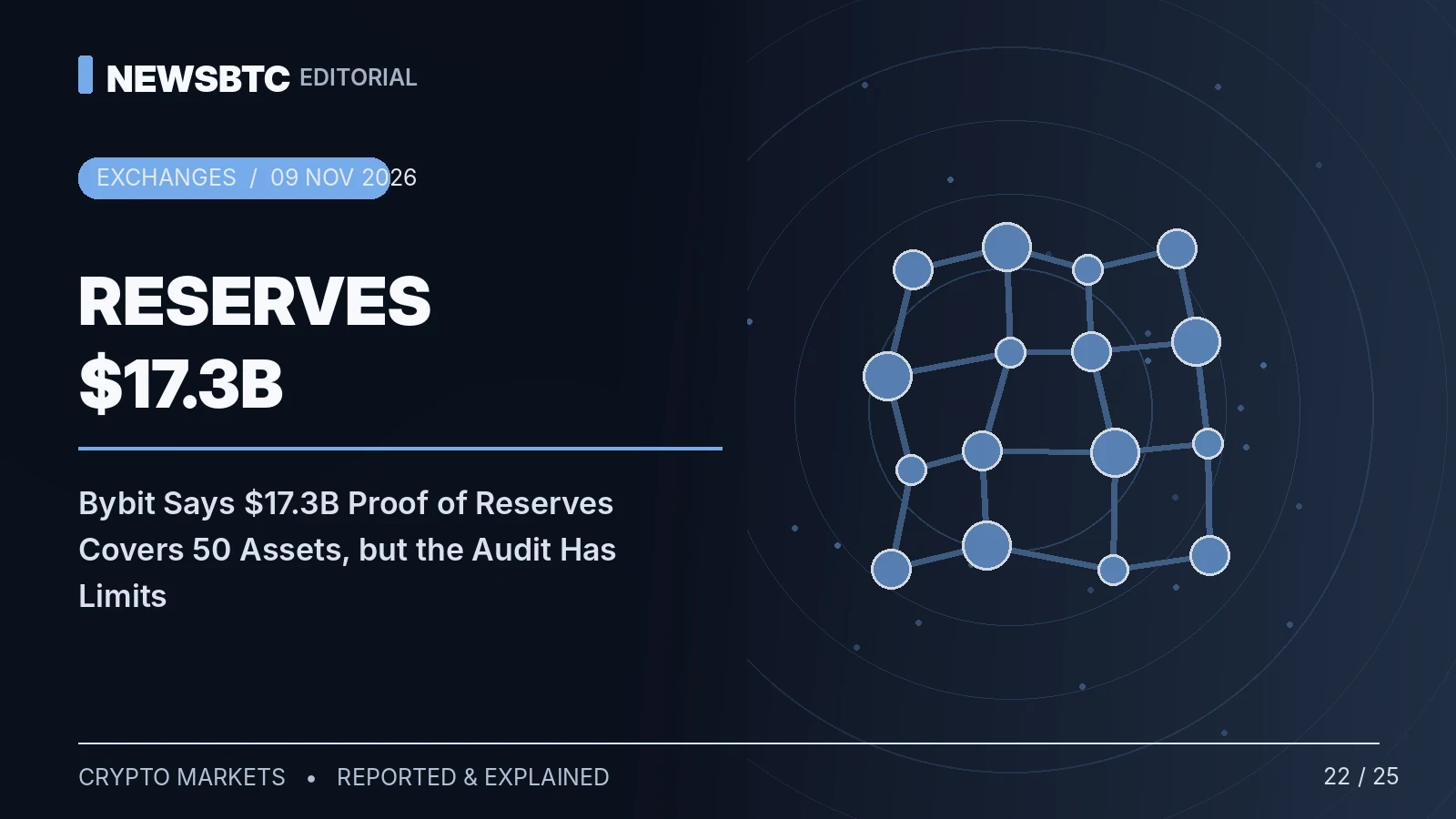
TL;DR: According to Bybit, the latest snapshot of its token-of-reserve system covered $17.3 billion in customer assets across 50 cryptocurrencies. The November 3 announcement includes its 41st report, with figures independently verified by security firm Hacken in an October 27 report.
According to Bybit, the latest snapshot of its token-of-reserve system covered $17.3 billion in customer assets across 50 cryptocurrencies. The announcement of November 3 presents its report 41, with the figures independently checked by the security firm Hacken in the description of October 27. The work shows the assets and balances of customers at a specific time, but do not be mistaken for the overall objective guarantee that the exchange can meet all the obligations under each situation.
Ratios at the back of the chapter
Bybit says its reserves have exceeded 100% in all 50 assets, including 112% for USDT, 405% for USDC, 102% for Bitcoin and 101% for Ether. Such percentages are compared to defined reserves and customer balances under specified conditions. A very high ratio for a single brand does not mean that the business has the same surplus in each asset, or that reserves can be moved freely between customer pools. Readers should also separate a mark-by-mark reserve ratio from the consolidated corporate settlement, which includes restrictions that may not be reflected in the mark-by-reserve picture.
What is the reason for the description date
The release indicates the countdown will be October 27 at 06:00 UTC. Reserve balances, withdrawals, borrowings, market prices and off-exchange exposures may have changed after that time. The value of repeated information lies in one aspect of comparison: it allows users to look for constants or sudden movements, rather than relying on a single publication as a permanent explanation. According to Bybit, the checks covered the 50 listed crypto assets, but the correct scope, customer segments and regulatory requirements are questions to be evaluated in a detailed report.
What can a special flag do?
The exchange states that Hacken did the verification. Third-party involvement can be useful, especially if the reviewer explains its terms and conditions, but the word ‘review’ can be interpreted broadly. The Merkle-log function allows customers to verify that a balance has been entered while showing that you have top-notch assets. There are no debts, encumbrances, corporate claims or administrative inefficiencies. The range of activities that should be taken into account in the reputation of the inspector.
Consumer protection is in other layers
Asset support is a key question for maintenance transactions because users rely on the firm to recover assets that cannot be properly managed. However, security rights, market surveillance, legal ownership of consumer assets, exclusivity and expropriation procedures. A fully funded photo is only one part of the overall risk picture. The report is most informative when combined with clear explanations of liabilities, separate financial statements when available and timely incident reports. Do not substitute for human judgment of the concentration of care.
How readers use the products
Bybit users can check conditions and verify balances if the relevant device supports that check. External analysts should compare follow-up reports and look for consistency between claim assets and holdings on the chain. Markets can benefit from more systematic deposits, but clear bonds are an important part of true understanding. The important point is the reporting process, not the declaration that the collateral risk has disappeared.
Primary source: Bybit trademark notice. For more context, see NewsBTC’s analysis of stablecoin earnings and performance at another major exchange.
This article was written by The News Desk and edited by Samuel Rae.