As the end of 2026 looms, expectations for rate cuts next year have fallen sharply, with the Reserve Bank warning that households will feel the pinch.
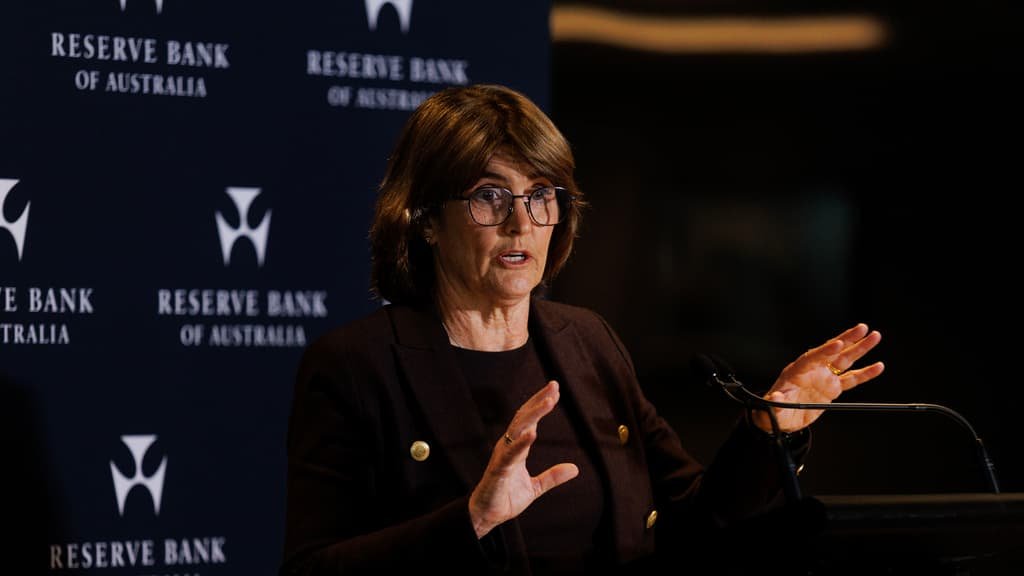
Governor Michele Bullock had some hard-hitting observations for Australians when she faced the media after Tuesday’s landmark meeting of the RBA’s monetary policy board.
On Tuesday, members voted 6-3 to raise the cash rate to an 18-year high of 4.85%, predictably sparking backlash and criticism.
Mortgage holders will feel the pinch, with payments on a $750,000 home loan increasing by about $120 a month.
Ms Bullock used it at a press conference on Tuesday to confirm that Australia’s domestic problems with inflation late last year were now more damaging than previously thought.
It is consumer and government spending that is driving the supply and demand imbalance, which the RBA now says is the main reason for monetary policy tightening.
RBA Governor Michele Bullock says Australians will feel they are in recession. Photo: Nikki Short
“I want to be very clear that we are not tightening because of the direct impact of oil prices on inflation,” Ms Bullock said. “I know there is confusion in the community, so I want to be very clear.”
MPB members who voted to keep the cash rate this week said they wanted to wait for more information, Ms. Bullock said, adding that the four rate hikes that have already taken place through natural backlash have yet to take effect.
“Obviously there are some members who are concerned that the economy is approaching a tipping point,” said Belinda Allen, the Commonwealth Bank’s head of Australian economics. “It’s a surprise the last time inflation was discussed as a top priority.”
The inflation picture has become cloudy
The trimmed average, a technical measure of core inflation, has remained at 3.6% for more than half a year.
| month | Trimmed Mean (%) |
| September | 3.6 |
| August | 3.5 (revised from previous reading 3.6) |
| july | 3.6 |
| June | 3.6 |
| May | 3.6 |
| April | 3.4 |
| March | 3.3 |
| February | 3.3 |
| january | 3.3 |
This is well outside the RBA’s target range of 2-3% for low and stable inflation, and does not cover the most volatile prices that households are struggling with.
Outliers such as fuel are left out of the calculation to provide a more comprehensive picture of inflation, which is instead shown in the broader headline inflation figure, the Consumer Price Index (CPI).
The CPI covers things like leisure, clothing, alcohol and communication costs as well as transport, healthcare, housing and food prices.
Its trajectory has been significant this year and currently sits at 4.3% in the 12 months to September, showing how many households are shrugging off rising rates.
Consumers have faced rising prices of fuel, food and goods this year. Image: Getty
Deloitte Access Economics partner Steven Smith explains: “The bigger concern is that domestic price pressures remain very strong. The economy has slowed without enough support for prices.”
“This is a difficult outcome for households already cutting costs and for businesses facing weaker sales.”
With interest rates not seen since the Global Financial Crisis, Scott Haslem, chief investment officer at LGT Wealth Management, said there would be “no doubt fierce debate” about how Australia’s economic situation had become so precarious.
Australia has become an international inflation benchmark for 2026, with data platform Trading Economics putting it behind only Iceland for the highest core inflation rate of all advanced economies.
“The post-1970s economy was born out of government reforms in the 1980s and early 1990s, bolstered by relatively disciplined fiscal management, combined with increased skilled migration to drive productivity gains that are the envy of the world thanks to moderate tax burdens and government debt levels,” Mr Hasslem said.
“We now have the seventh highest inflation rate in the G20 and have raised interest rates more than any other country in the G20 this year.”
Chalmers under pressure
Recent media appearances by RBA chiefs have focused not only on Australia’s inflationary woes, but also on the undeniable driver of government spending.
Speaking after Tuesday’s rate hike, Treasurer Jim Chalmers said the government “takes full responsibility” for its role in the inflationary environment.
Treasurer Jim Chalmers has come under fire over government spending but has refused calls to resign. Photo: Martin Ollman
“While we’re managing the budget responsibly, we’re also helping the cost of living in a really responsible way and trying to address Australia’s long-standing productivity problem,” he said.
“Australians are already struggling and this will stretch their budgets further.”
How the beleaguered property market reacts to the cash rate environment is of increasing concern to the Reserve Bank after the seventh straight month of price declines across the country.
This extreme rate hike could force unexpected buying, selling and moving plans, says Jacob Caine, president of the Real Estate Institute of Australia.
“The burden cannot fall on households alone. Governments must also avoid spending that drives up unnecessary demand and address the supply constraints that keep housing costs high,” he said.
“Families are already under real pressure. Another rate hike is driving up the cost of borrowing and making it harder for people to plan their next move in the housing market.”
While the current market remains troubled, further rate hikes spell bad news for the government’s plans to target new homes under Australia’s National Housing Deal, with supply, materials and labor all affected.
The Housing Industry Association (HIA) forecasts that Australia will be about 200,000 homes short of the government’s target of 1.2 million.
The lofty new homes target is under pressure again. Image: Getty
“High interest rates reduce the affordability of households,” adds Jocelyn Martin, HIA’s managing director.
Renters are also feeling the pinch as high inflation bites into every part of the real estate market.
“Tenants have been forced to absorb rent increases for years, forcing them to make impossible sacrifices and with no buffer as costs continue to rise,” said Maiy Azize, chairman of Everybody’s Home.
“Now that landlords are facing rate hikes, they can pass the cost on to tenants.”
Economy beyond
Many questions for Governor Michele Bullock on Tuesday revolved around the prospect of a recession in Australia, particularly whether the bank would purposely push the nation into recession to lower inflation.
While the governor said that was not the bank’s plan, he warned that households will feel this is a recession and economic growth should continue to slow.
Mr Haslem said softer trading updates from Australia’s major retailers indicated growth would move towards what is likely to be further Christmas spending cuts.
“If government spending actively slows over the next year, there is a reasonable chance that the RBA will cut the cash rate in the second half of 2027 amid weaker growth that improves the inflation outlook,” he said.
This year, Christmas shopping may help the economy slow down. Photo: Ye Myo Khan
Global cost pressures, high inflation expectations and domestic capacity pressures will keep the RBA on the sidelines, while Westpac chief economist Luci Ellis expects the bank may pause tightening.
“The governor commented that after five hikes, it’s probably a good time to settle. Along with the opposition, we read that as confirming the view that the MPB will keep rates on hold in December.”
Ms Ellis admits a “significant” influx of data is expected over the next few weeks that could change the forecast, but confirmed Westpac will stick to its February forecast for the next rate hike.
“We still see it as more of a risk than a baseline,” he adds.
The final cash rate decision for the year will be made on December 8.