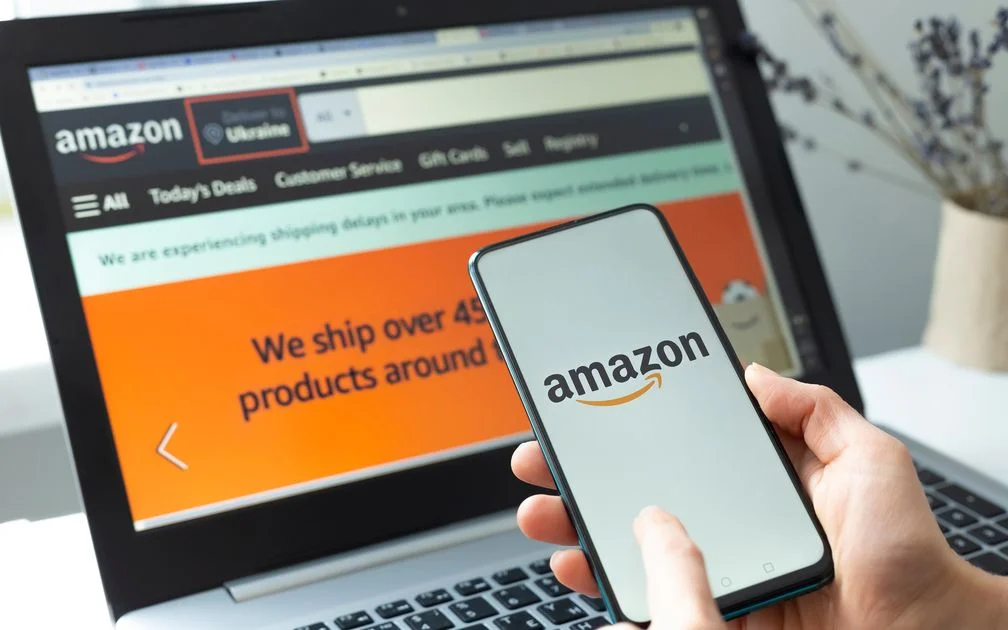
Amazon Merch on Demand
Amazon Merch on Demand (formerly Merch by Amazon) is Amazon’s own program for selling goods on Amazon without a seller account:
-
Apply and wait for approval.
-
Upload your artwork.
-
Set a list price.
-
Amazon prints, packages, ships and takes care of customer service.
-
You receive a royalty for every item sold.
Because Amazon manually reviews each application, approval cannot be guaranteed. There are no fees to join – your licensing fee is what’s left over after Amazon subtracts its costs from the list price. Since June 2026, license fees have also been dependent License Incentive Groups: Creators who generate more sales through external traffic like social media or ads earn more than those who rely on Amazon organic search.
This is the most straightforward way to sell clothes on Amazon, but Amazon is the seller – so you have less control over branding and no direct customer relationship, making it harder to build customer loyalty.
Fulfilled by Amazon (FBA)
With Fulfillment by Amazon, you produce your t-shirts in bulk and send them to Amazon, where each order is stored, packaged, and shipped, customer returns are processed, and offers are qualified for Prime shipping.
The catch is the upfront costs. You pay the purchase price for your inventory before anything is sold, plus shipping and storage fees based on item size and inventory volume – check this out Amazon’s FBA page for current tariffs.
Fulfillment by Amazon makes sense if you sell t-shirts in bulk. To test what will sell, print-on-demand carries far less risk.
3. Create t-shirt designs that sell

Now comes the fun part – get creative! Your niche – and your ideal customer – is your best source of design ideas. Do you love fitness? Design motivational t-shirts for other gym regulars. Obsessed with houseplants? Make t-shirts for proud plant parents.
Popular design directions are:
-
Niche puns and inside jokes
-
Motivational phrases (written by you)
-
Animal motif designs
-
Vintage and retro graphics
-
Holiday and seasonal designs
No design experience? Use Printful’s Design Maker to add text, graphics, and clipart, then preview your print on real products.
Before selling shirt designs on Amazon, make sure they are original. Amazon removes offers that violate trademarks or copyrights. Therefore, skip brand logos, characters, song lyrics and famous movie lines.
Learn more:
4. Determine your pricing strategy
When selling t-shirts, the right selling price will keep you competitive and profitable. The price is too high and your target customer scrolls past. The price is too low and the fees eat up your margin.
Start by adding up all the costs per shirt:
-
Production (the blank shirt plus t-shirt printing or embroidery)
-
Shipping and other fulfillment costs
-
Referral fees, plus your monthly subscription fee or $0.99 per item
-
Advertising
When setting prices, pay attention to Amazon clothing fee tiers. Because the recommended price applies to the full price of a shirt listed on $20 pays a $2 Fee while one at $20.01 pays approx $3.40.
Then research the competition:
-
Search your niche and pay attention to what similar shirts are selling for.
-
Check which top listings are performing well – their list price, product titles, and customer reviews.
-
Use Product Opportunity Explorer in Seller Central to identify price and sales trends.
Check prices as trends and costs change. Once a t-shirt is selling well, add hoodies in the same design to boost sales.
Read more: How to determine the price of custom shirts
5. Get noticed on Amazon
Amazon’s marketplace is huge, so it’s easy to get lost in the crowd. Here’s how to make sure your t-shirts stand out and sell.
Do some Amazon SEO
Let’s say a customer wants a t-shirt that expresses his love of books. You type “book t-shirt” into the search bar and get thousands of results. You compare a few entries on the first page – but rarely scroll further.
That’s where Amazon SEO makes the difference. Amazon determines which offers are shown first based on relevance and sales performance.
How to improve your product listings:
-
Use relevant keywords naturally – Amazon’s search bar suggestions are a free place to start.
-
Write product titles that lead to your main search term.
-
Use all five points to cover fit, fabric, size and care.
-
Enter backend search terms by targeting specific keywords that don’t fit elsewhere.
-
Select the correct category so that your shirts also appear on product category pages.
Optimized product listings drive more views, more clicks and more sales. Ready to dive deeper? Here is a complete guide to Amazon SEO.
Add compelling product photos
A customer is not allowed to touch your shirt, so your photos are responsible for the sale.
To grab the attention of Amazon customers, make sure your images:
-
High quality: Clear, well lit and not pixelated.
-
Compliant with Amazon’s policies: Main images require a pure white background with no additional text or graphics.
-
Varied: Add design close-ups, fabric details, a size guide and lifestyle shots.
No photoshoot budget? Printful’s mockup generator creates realistic product photos for you.
Promote your offers with Amazon advertising
If you’re serious about selling t-shirts on Amazon, ads will speed things up. Amazon Professional tier sellers can use three main formats:
Sponsored Products are cost-per-click ads for individual entries. They appear in search results and on product pages – the easiest place to start.
Sponsored Brands Display your logo, a custom headline, and multiple products in a banner above search results. To run it you need Brand Registry.
Sponsored Adnow part of Amazon Display Ads, again targets shoppers who have viewed your products – on Amazon and other sites across the internet.
Start small with sponsored products, find the keywords that drive sales, and then scale up.
Read more: 8 Effective T-Shirt Ads (And Why They Work)
Create excitement with social media marketing
Social media is one of the best ways to drive sales and reach new customers outside of Amazon. Instagram, TikTokAnd Pinterest are perfect for showcasing your t-shirts.
Tailor your content to the social media channels your buyers actually use:
-
Share behind-the-scenes insights into your design process.
-
Repost customer photos and reviews to build trust.
-
Run giveaways, surveys, or launch countdowns.
-
Link directly to your Amazon listings.
Respond quickly to every customer comment – a responsive brand strengthens customer loyalty and ensures repeat sales.
Learn more: