
Zazzle has served creators of invitations, stationery, and wedding supplies since 2005. Its marketplace model lets designers upload artwork and earn royalties without managing a website or inventory.
The catch? Zazzle owns the customer, sets the base price, and takes a cut of your royalty in its busiest categories. That’s a tough deal if you want brand control, higher profit margins, and an email list of your own.
This guide compares 10 Zazzle alternatives in two groups: print-on-demand platforms that fulfill orders for your own store, and marketplaces that work like Zazzle and bring their own shoppers. Each pick comes with pricing, catalog size, and an honest trade-off.
Key takeaways
-
Zazzle is a marketplace. Creators earn up to 50% in royalties on physical products, and Zazzle retains the customer relationship.
-
Print-on-demand platforms like Printful and Printify connect to Shopify, Etsy, and other stores, where sellers build a brand, control pricing, and keep customer data.
-
Your own store typically delivers higher profit margins once sales cover your marketing costs. Marketplaces fund shopper traffic themselves but have a heavier effect on profits.
-
Printful offers more branding tools than marketplaces: custom packaging with your own logo, branded packing slips, and inside labels for a professional customer experience.
-
All 10 alternatives start at $0 with no upfront costs. Catalogs range from 80 to 2,000 and more.
What is Zazzle, and how does it work?
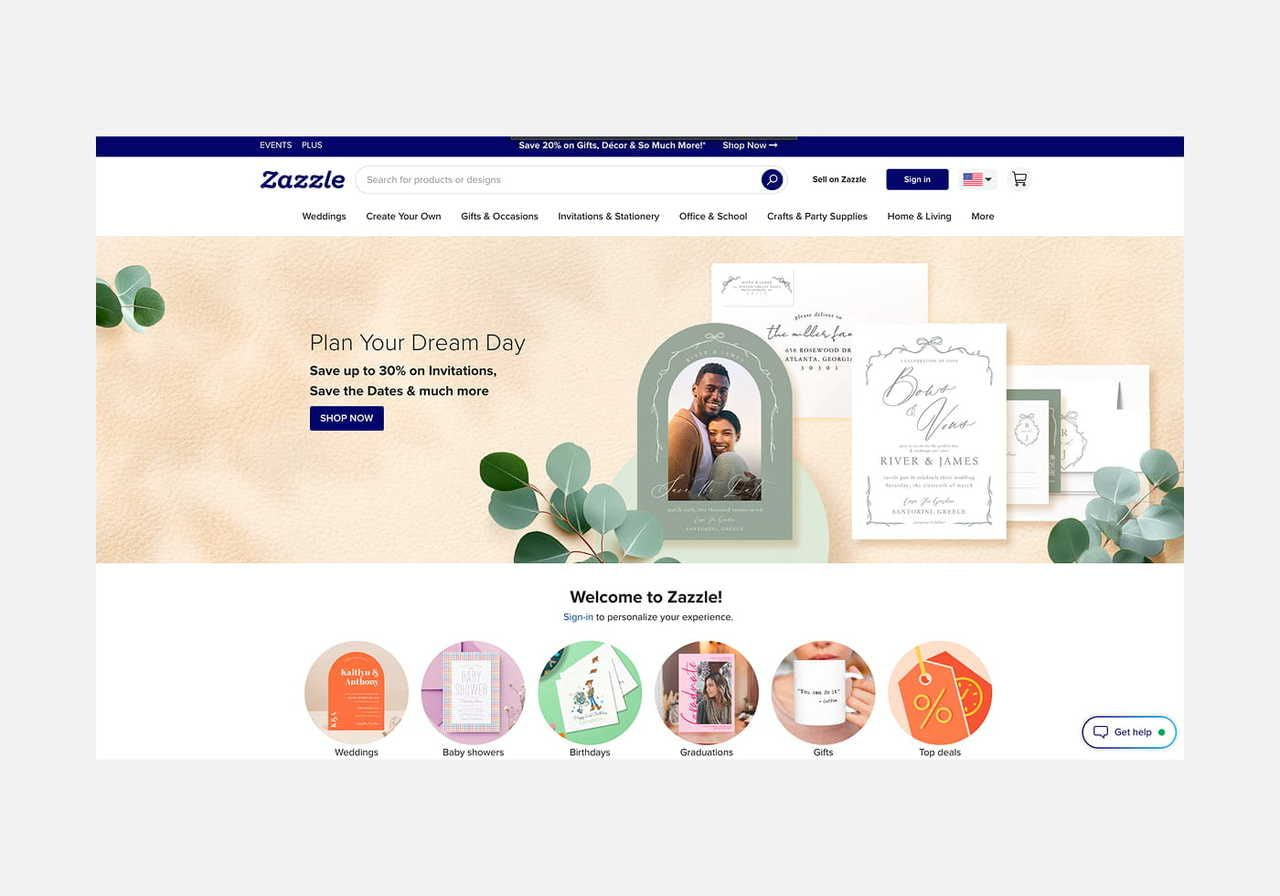
Source: Zazzle
Zazzle is an online marketplace that connects independent designers with customers looking for personalized products. As one of the longest-running marketplaces in the print-on-demand space, Zazzle works on a royalty model. That means you upload your artwork to its extensive catalog of customizable products – from t-shirts to custom postage stamps – and add a royalty on top of Zazzle’s base price.
Creators set the royalty themselves from a 5% default up to 50% on physical products and 99% on digital downloads.
When a customer buys your design, Zazzle handles manufacturing, shipping, and customer support. Zazzle’s advanced design editor lets shoppers add their own names, dates, or photos to your art, making it a common pick for custom gifts.
What are the pros and cons of using Zazzle?
Before choosing between Zazzle and its competitors, weigh where the platform helps sellers and where it limits them.
Pros:
-
Built-in audience: Shoppers find your designs through Zazzle’s search and category pages, so you can sell without running ads.
-
No upfront costs: Opening a Zazzle store and listing designs costs nothing.
-
Customization: Advanced design tools let shoppers personalize products themselves.
Cons:
-
Royalty-only earnings: You earn the royalty you set above Zazzle’s base price. Higher royalties raise the retail price shoppers see next to competing designs.
-
Limited brand control: Buyers check out on Zazzle and become Zazzle’s customers. You don’t get access to customer data for email marketing.
-
Closed ecosystem: Zazzle offers no order integration for Shopify, Etsy, or WooCommerce. Creators can send outside traffic to Zazzle with referral links, and every checkout happens on Zazzle.
-
Market saturation: Millions of products compete in Zazzle’s search results, so new designs can get buried.
10 Zazzle alternatives: An overview
The table below compares 10 companies, including Zazzle, by type. Marketplaces bring their own shoppers and control the storefront. Print-on-demand platforms produce and ship orders for your own store and other sales channels.
| Printful | POD platform | Brand building | 580+ | $0 (Free) |
| Printify | POD platform | Higher profit margins | 2,000+ | $0 (Free) |
| Gelato | POD platform | Fast global shipping | Hundreds | $0 (Free) |
| Fourthwall | POD platform | Social media creators | Hundreds | $0 (Free) |
| AOP+ | POD platform | All-over print designs | 140+ | $0 (Free) |
| Apliiq | POD platform | Streetwear brands | 1,200+ | $0 (Free) |
| Redbubble | Marketplace | Passive sales | 80+ | $0 (Free) |
| Society6 | Marketplace | Wall art and decor | Not published | $0 (Approval required) |
| CafePress | Marketplace | Customized products | Not published | $0 (Free) |
| Amazon Merch | Marketplace | Marketplace reach | Apparel-led | $0 (Free, invitation required) |
What are the best Zazzle alternatives for Print on Demand?
If you’re ready to move beyond a marketplace and start a print-on-demand business, these alternatives to Zazzle offer different ways to sell products. Each entry lists the platform’s type, pricing, and main trade-off.
1. Printful
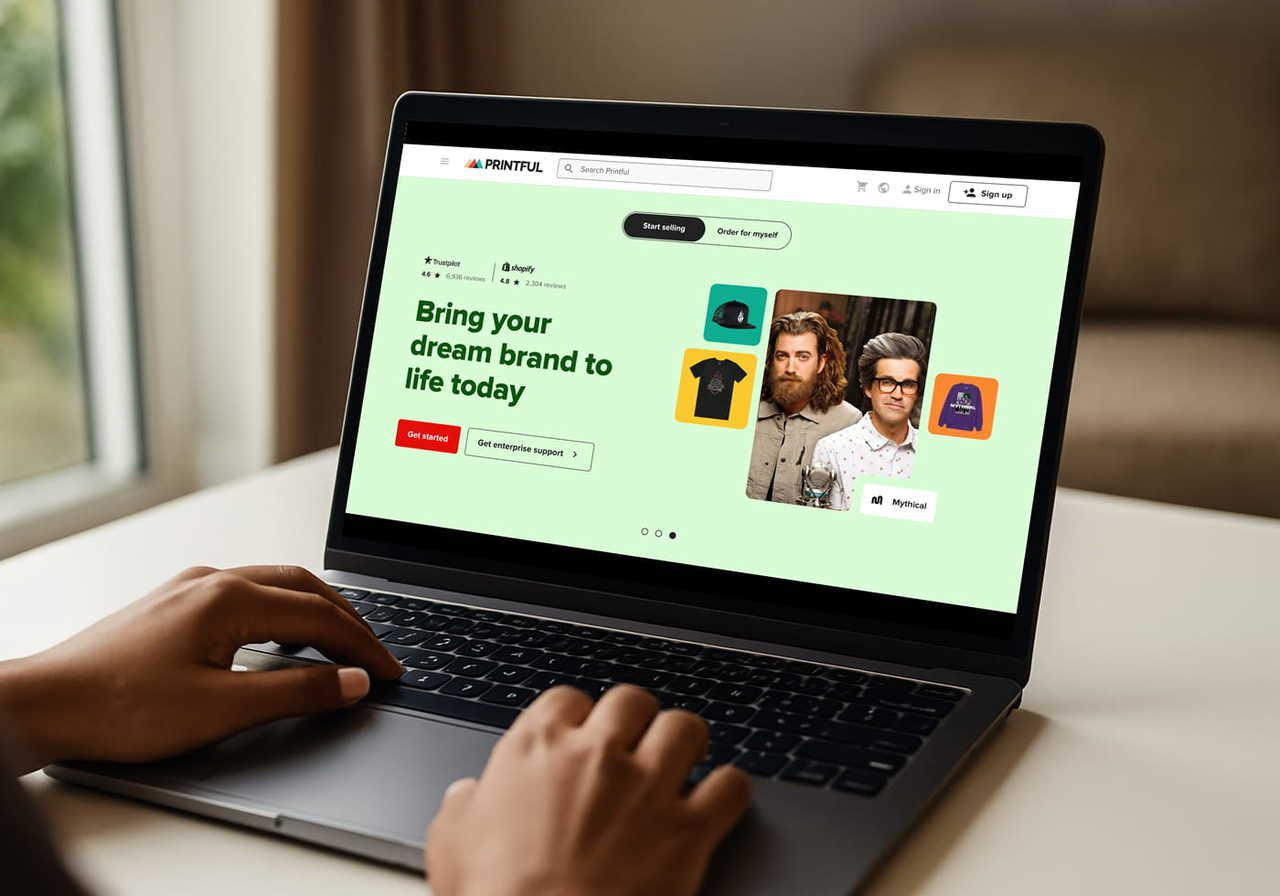
Printful is a print-on-demand fulfillment company that produces and ships custom products for online store owners, from first-time sellers to scaling brands. Printful requires no upfront investment and integrates with major eCommerce platforms like Shopify, Etsy, and WooCommerce.
-
Type: POD platform.
-
Product count: More than 589 high-quality products, including custom apparel, wall art, home decor, and tech accessories.
-
Pricing: Free plan with no monthly fee. You pay the base price only when an order comes in. The optional Printful Growth plan costs $24.99/month and takes up to 33% off product pricing.
-
Branding and design tools: Custom packaging with your own logo, branded packing slips, inside labels, the free Design Maker, and a built-in Mockup Generator.
-
Best for: Brands and small business owners who want brand control and high print quality.
-
Trade-off: Printful’s base prices on the Free plan run higher than some competitors’, and its catalog stays smaller than the largest provider networks.
Printful’s global fulfillment centers include seven in-house facilities in the US, Mexico, Canada, Latvia, Spain, and the UK, plus partner facilities in Brazil, Japan, and Australia. In-house production keeps product quality under one quality control process and supports consistent production across orders.
Printful has delivered more than 147 million items since 2013. Printful stores your custom packaging and adds branded packaging inserts to orders.
2. Printify
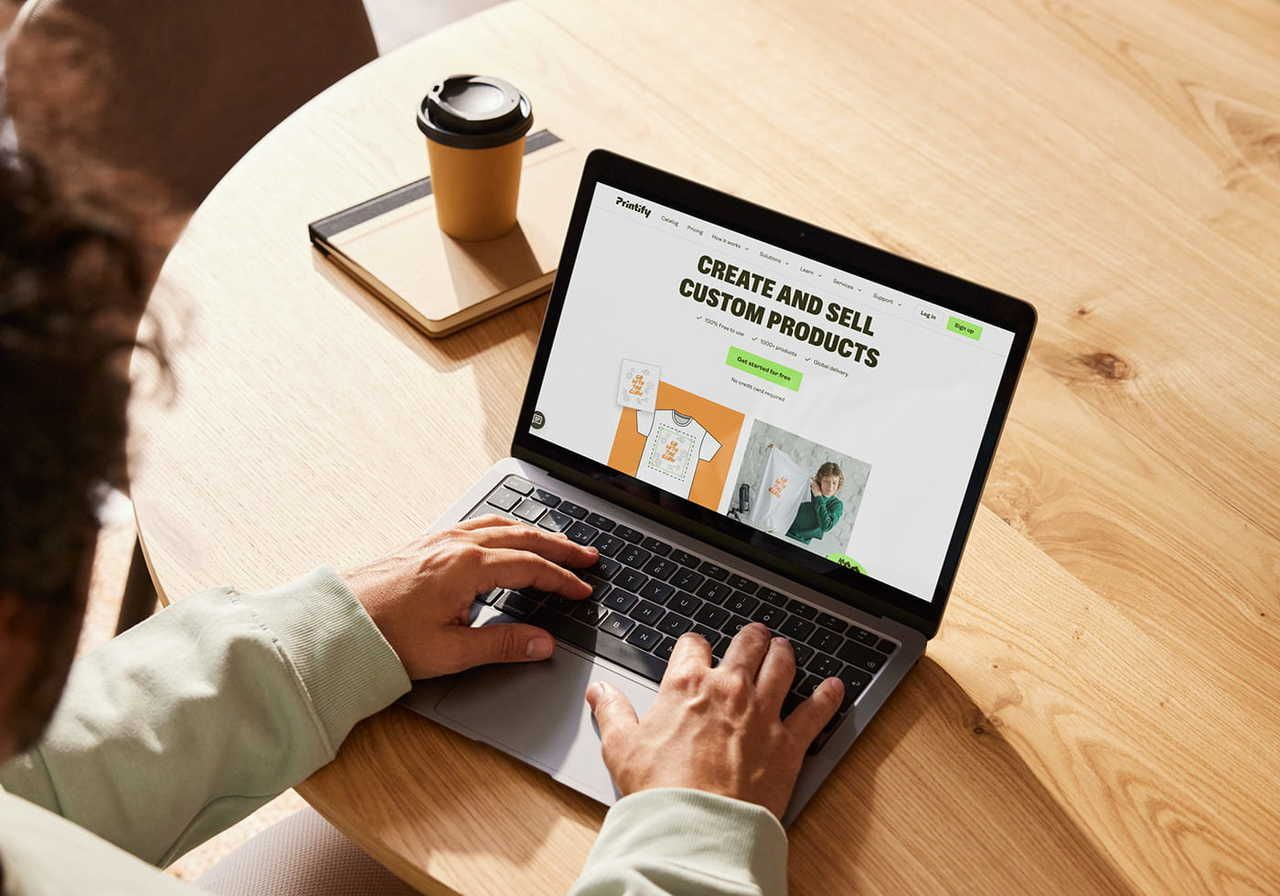
Printify is a print-on-demand platform that connects sellers with a global network of more than 70 Print Providers. Sellers compare prices, production locations, and print quality across providers for each product, which suits brands that prioritize competitive pricing.
-
Type: POD platform.
-
Product count: A massive product catalog with more than 2,000 items.
-
Pricing: Free plan available. The Premium plan costs $39/month, or $24.99/month billed yearly, and takes up to 20% off all products.
-
Best for: Scaling businesses looking for low base prices and a broad range of products.
-
Trade-off: Print quality and shipping times vary by Print Provider. Sellers need to compare partners and order samples before choosing one for each product.
3. Gelato
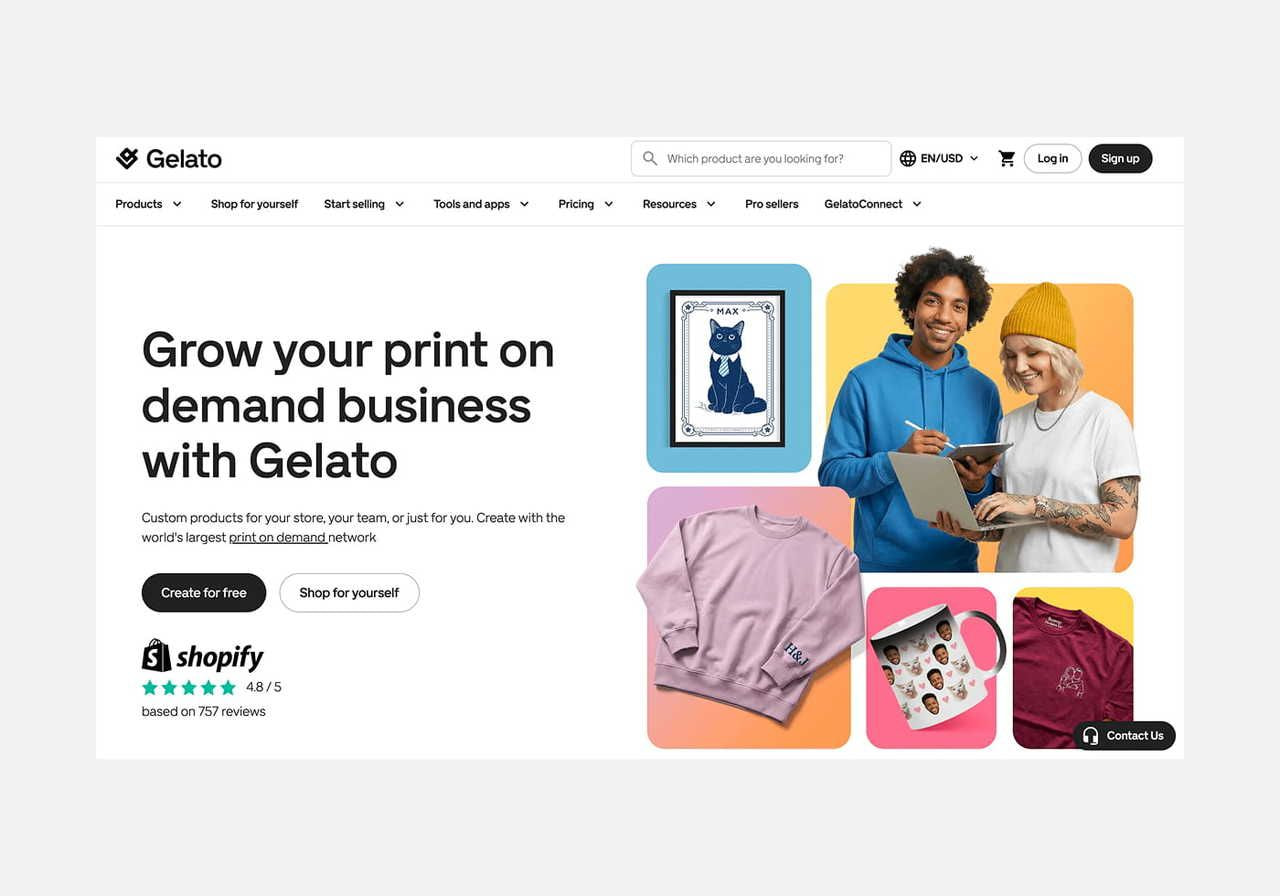
Source: Gelato
Gelato prints orders close to customers through local production. Its network spans more than 250 production hubs in 32 countries, and Gelato reports that 90% of orders arrive within five days, which supports reliable delivery for international sellers.
-
Type: POD platform
-
Product count: Hundreds of products, with a focus on wall art, high-quality prints, cards, apparel, and photo books. Gelato doesn’t publish an exact count.
-
Pricing: Free plan for up to two connected stores. Gelato+ costs $29.99/month, or $19.99/month billed yearly, and adds up to 33% off products, Personalization Studio, AI mockup tools, and 800+ premium mockups.
-
Best for: Wall art and stationery sellers who need to reach customers worldwide quickly.
-
Trade-off: Gelato routes orders to independent partner facilities, so results vary by location. Product discounts and Personalization Studio require a paid plan.
4. Fourthwall
Source: Fourthwall
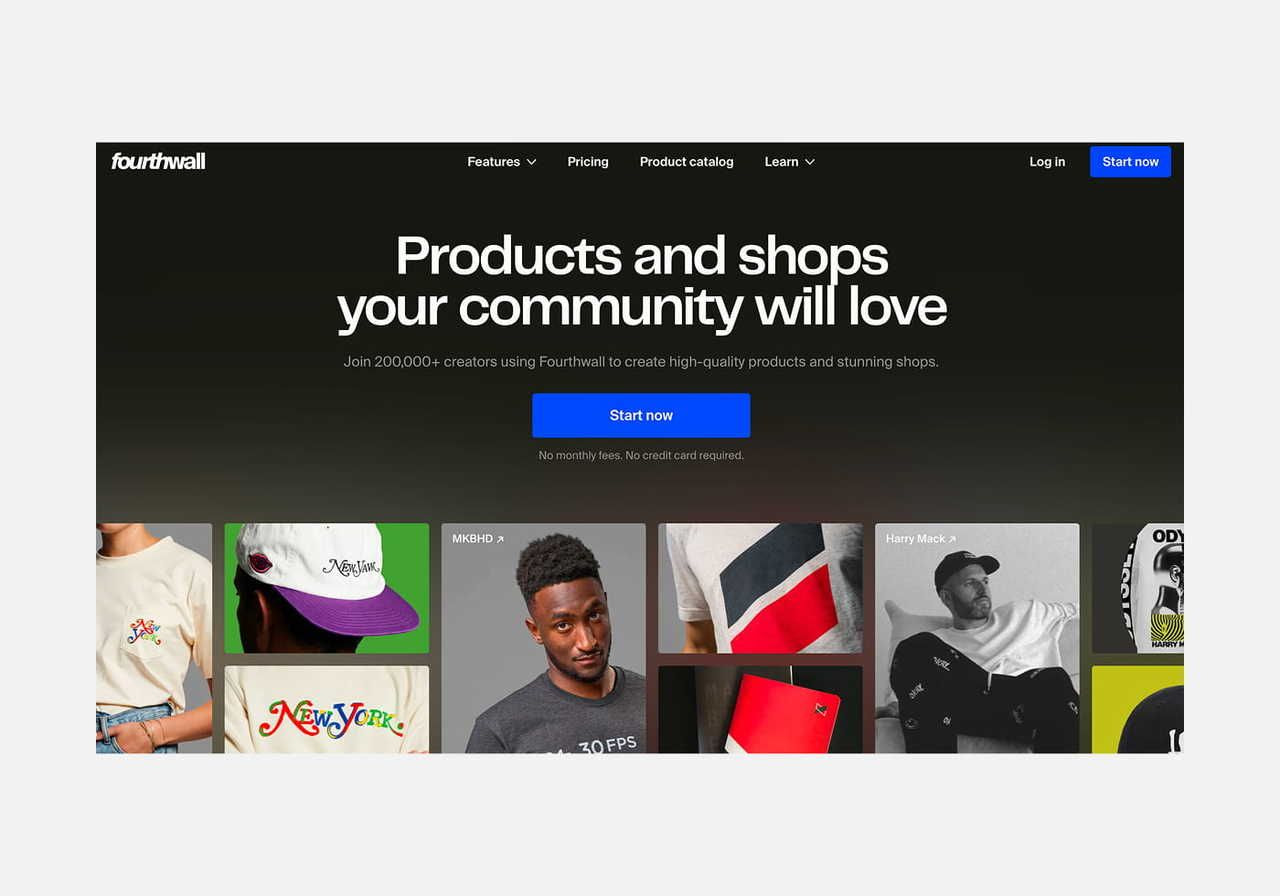
Fourthwall combines a website builder, built-in POD, memberships, and digital products in one platform for the creator economy.
-
Type: POD platform with a built-in storefront.
-
Product count: Hundreds of retail-quality products, from apparel to mugs and jewelry.
-
Pricing: Free plan with no monthly fee. Each catalog product carries a publicly listed flat fee that Fourthwall deducts from the selling price you set. Digital products and memberships carry a 5% fee, and Fourthwall Pro, from $15/month, removes the fee on digital products.
-
Best for: YouTubers and influencers who want an all-in-one online store with memberships and digital products.
-
Trade-off: Fourthwall lists a delivery window of 7-10 days for most items.
5. AOP+
Source: AOP+
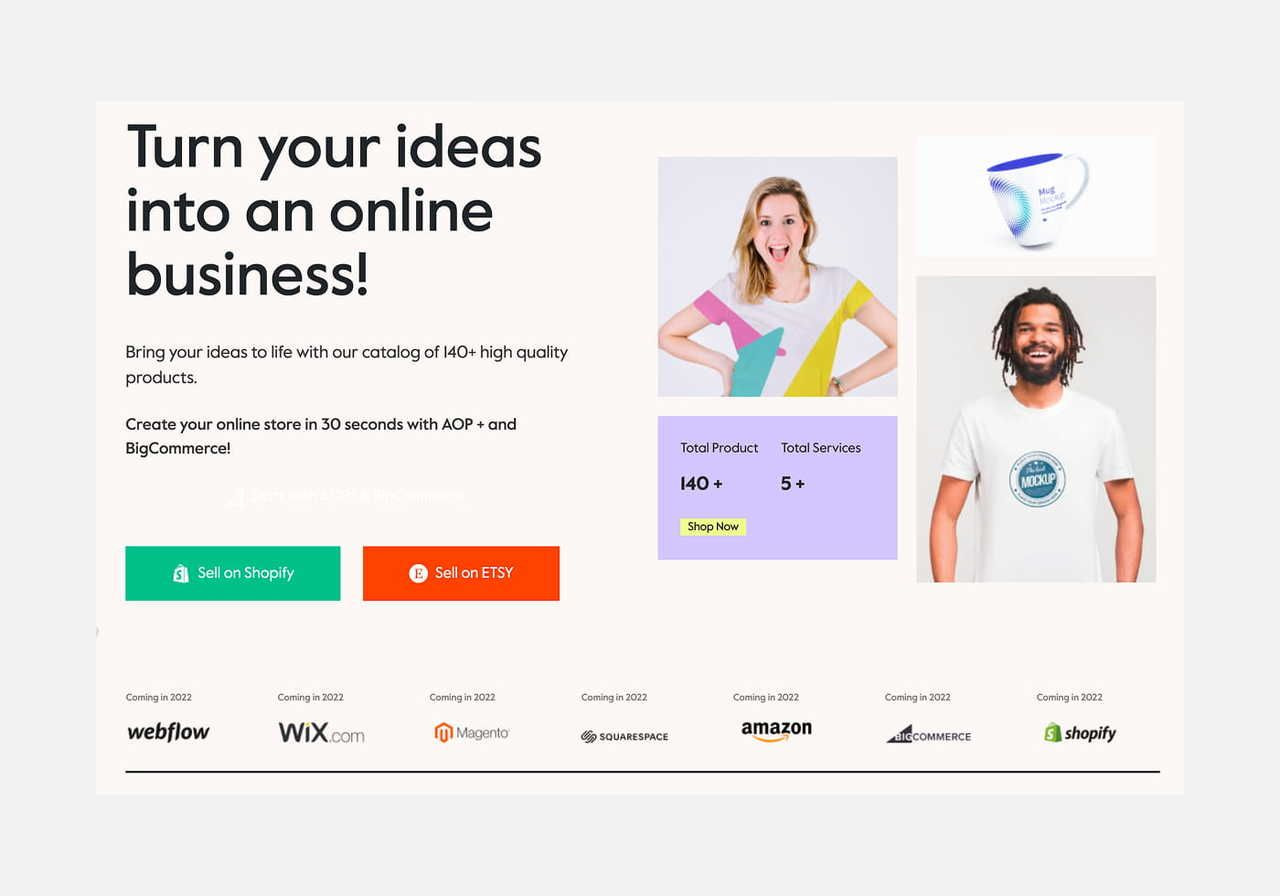
AOP+ (All Over Print Plus) is a print-on-demand company that produces all-over print apparel and home goods in-house at its London facility.
-
Type: POD platform
-
Product count: 140+ products.
-
Pricing: Free to start. An optional AOP+ Pro subscription adds VIP discounts and exclusive products. AOP+ doesn’t publish the Pro price on its site.
-
Best for: Designers creating bold, repeat patterns on apparel and home goods.
-
Trade-off: Integrations cover Shopify, Etsy, and BigCommerce only.
6. Apliiq
Source: Apliiq
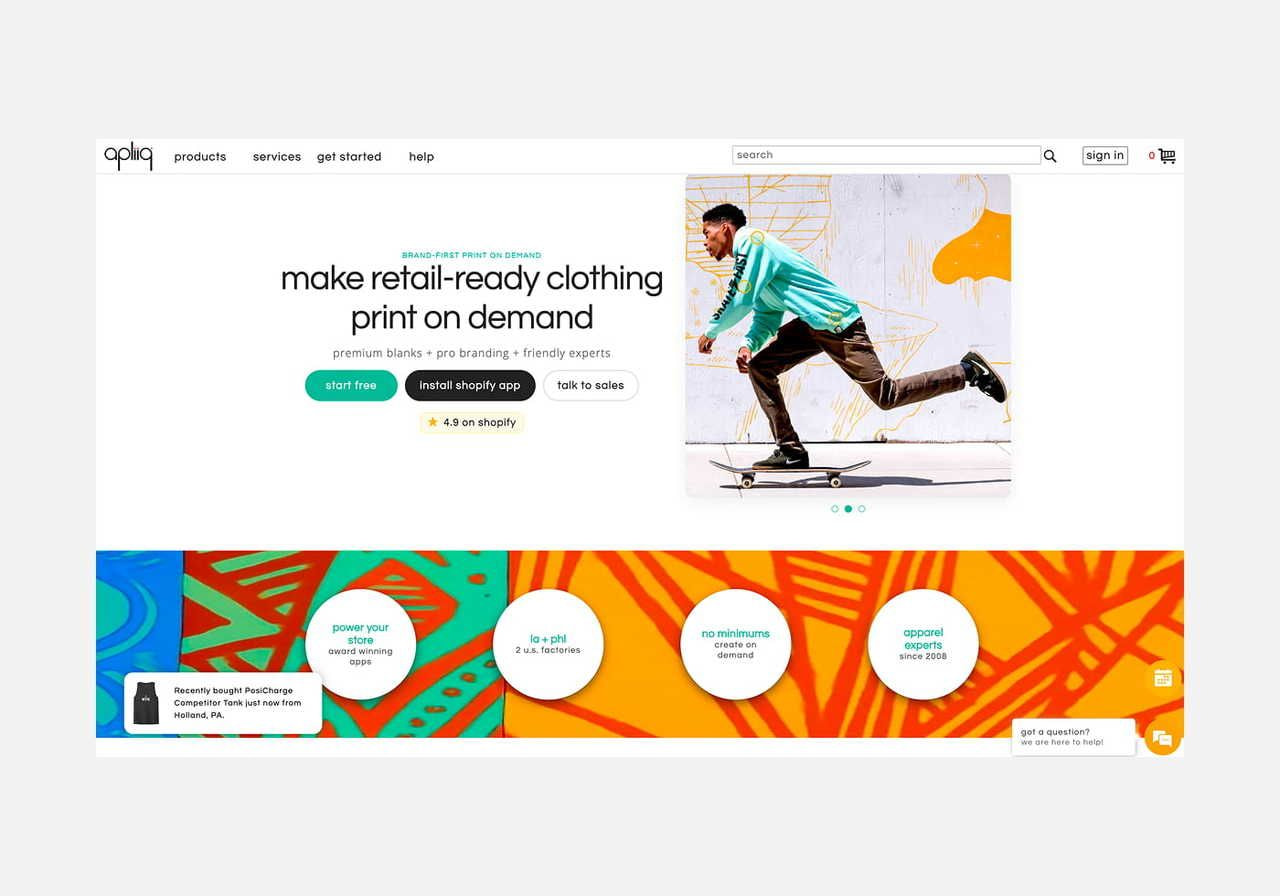
Among Zazzle competitors, Apliiq is a US print-on-demand company that specializes in high-end custom apparel with private labeling, including custom interior tags, woven labels, and embroidery. Apliiq produces orders in two US factories in Los Angeles and Philadelphia.
-
Type: POD platform.
-
Product count: 1,200+ clothing styles.
-
Pricing: Free to start. An optional VIP membership takes 20% off all dropshipping products and services. Woven labels, private labels, and patches cost extra.
-
Best for: Fashion brands that want a private-label feel with custom branding, including custom interior tags and embroidery.
-
Trade-off: The catalog covers apparel and accessories only, and all production runs in the US, so international customers wait for cross-border shipping.
7. Redbubble
Source: Redbubble
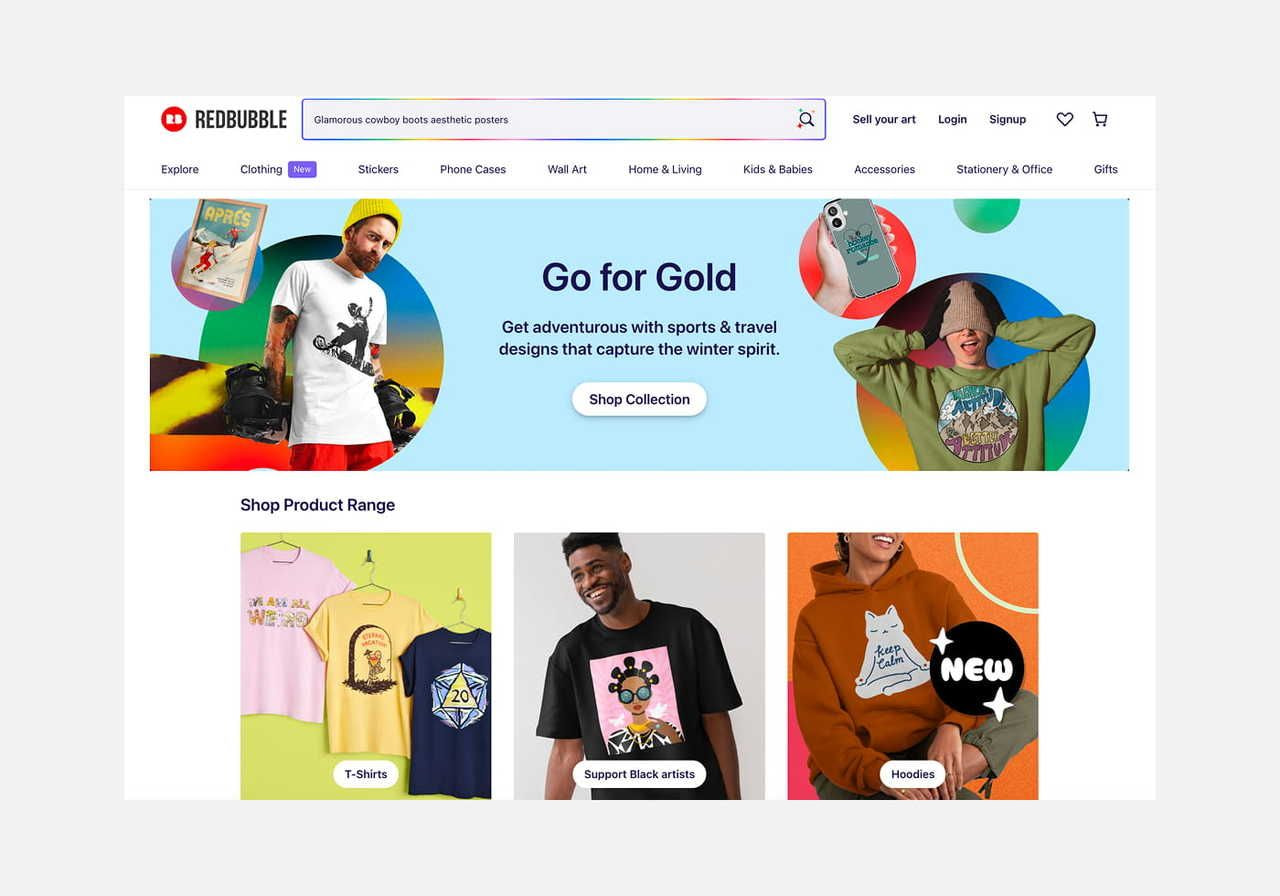
Redbubble is an online marketplace that works the most like Zazzle: artists upload designs, and Redbubble sells them to its own shoppers. Redbubble suits artists who want passive sales potential through a built-in audience.
-
Type: Marketplace.
-
Product count: 80+ products.
-
Pricing: You set your own markup over Redbubble’s base price. Account fees take 50% of monthly earnings on Standard accounts and 20% on Premium accounts, and markup above 20% carries a 50% excess markup fee. Total fees cap at $150 per month.
-
Best for: Artists who don’t want to manage their own store or do their own marketing.
-
Trade-off: Redbubble assigns your account tier, and Standard accounts lose half of their monthly earnings to fees. Only Pro accounts skip account fees.
8. Society6
Source: Society6
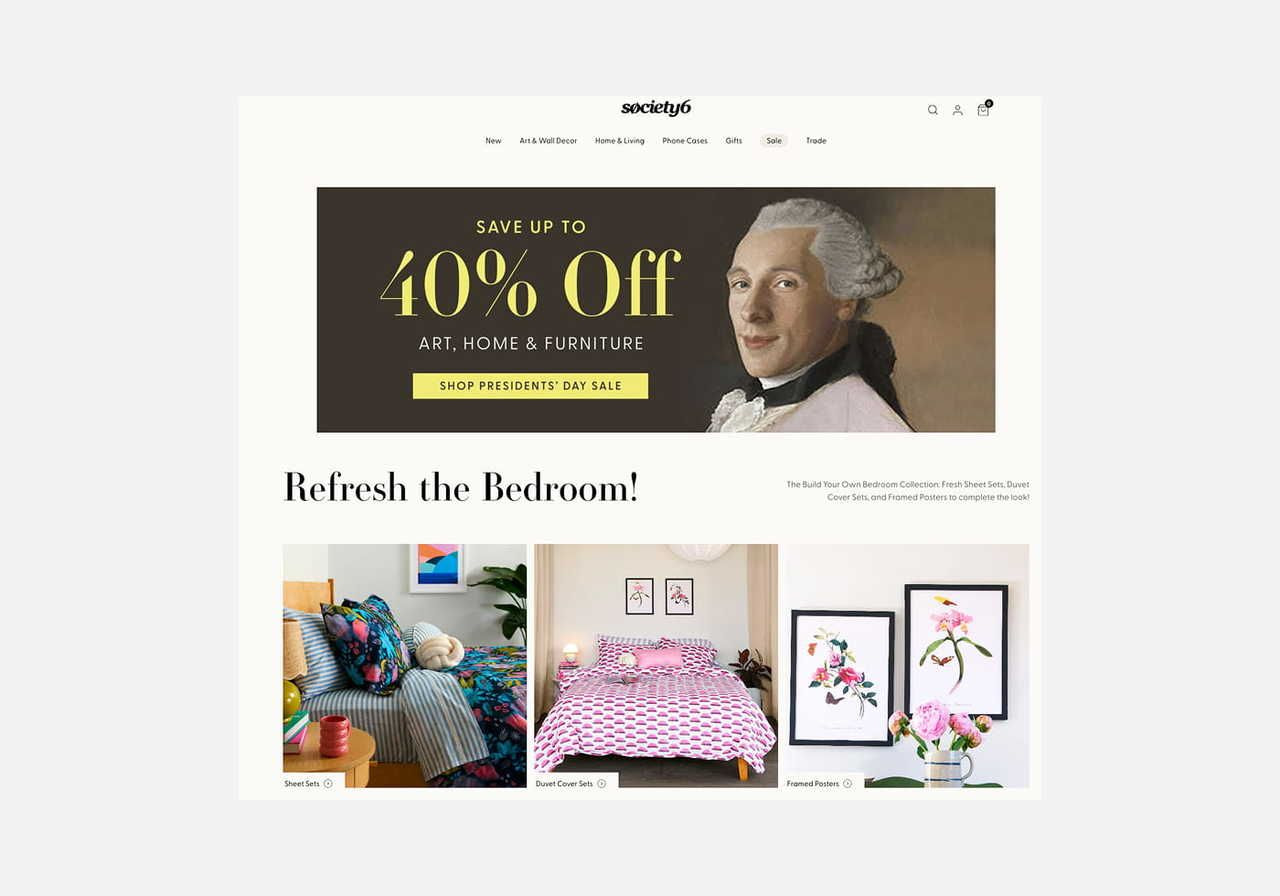
Society6 is a curated art marketplace that focuses on the art side of Print on Demand, with a catalog centered on wall art and home decor.
-
Type: Marketplace.
-
Product count: Society6 doesn’t publish a current product count.
-
Pricing: Since March 2025, Society6 sets product prices and pays artists 5% on most products and 10% on pillows, tapestries, framed art, and posters. Artist plan fees no longer apply.
-
Best for: Fine artists and photographers.
-
Trade-off: Society6 accepts artists and designs by approval only, and artists can’t set their own prices.
9. CafePress
Source: CafePress
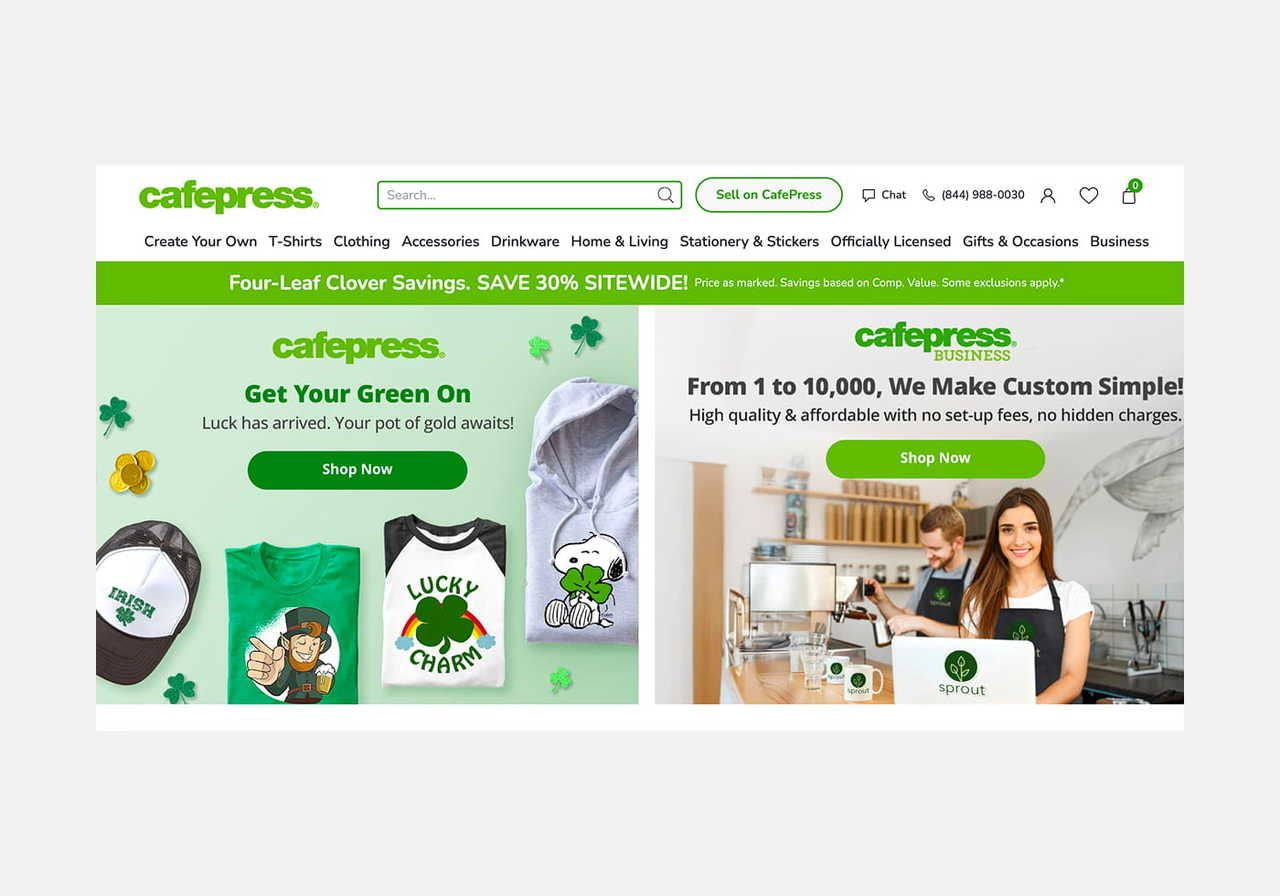
CafePress is one of the oldest custom merchandise marketplaces and shares Zazzle’s gift focus with a more vintage catalog. CafePress still offers a Sell on CafePress option for new shop owners.
-
Type: Marketplace.
-
Product count: Over 450.
-
Pricing: Set your own retail prices with a markup over CafePress’s base price.
-
Best for: Niche hobbyist groups and political or topical designs.
-
Trade-off: CafePress offers no integrations with outside stores, and buyers check out as CafePress customers.
10. Amazon Merch on Demand
Source: Amazon Merch on Demand
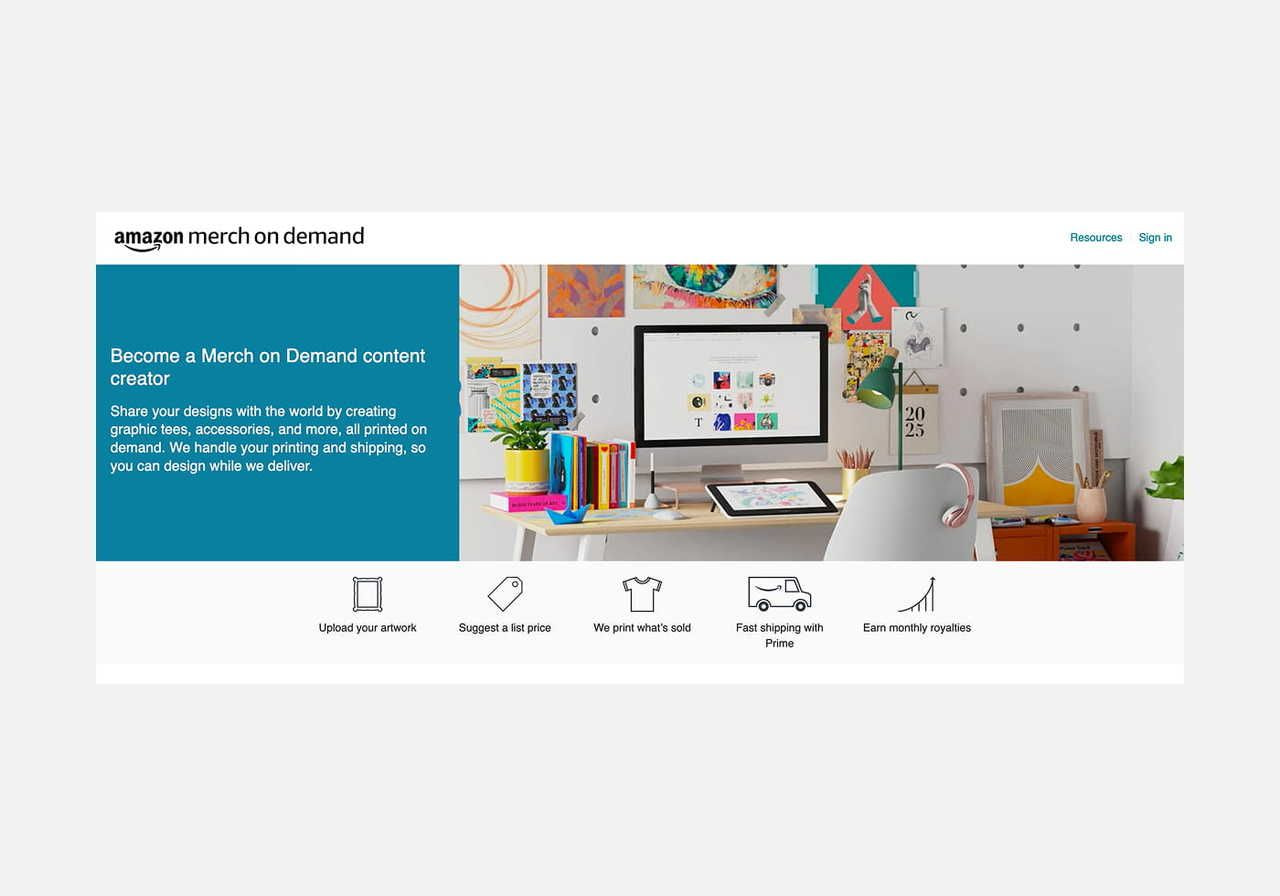
Amazon Merch on Demand is Amazon’s invitation-only print-on-demand program. It lists your designs directly on Amazon’s product pages, where shoppers find them through Amazon search.
-
Type: Marketplace.
-
Product count: Limited to core apparel (t-shirts, hoodies) and some accessories.
-
Pricing: Free to join; invitation-only. You set the list price, and your royalty equals that price minus Amazon’s costs.
-
Best for: High-volume sellers who can optimize for Amazon’s search engine.
-
Trade-off: Amazon approves sellers by invitation, and buyers become Amazon’s customers.